







Posted on 04/03/2026
Global Financial Earthquake: Why the Asian Stock Market Today Just Hit the Kill Switch?
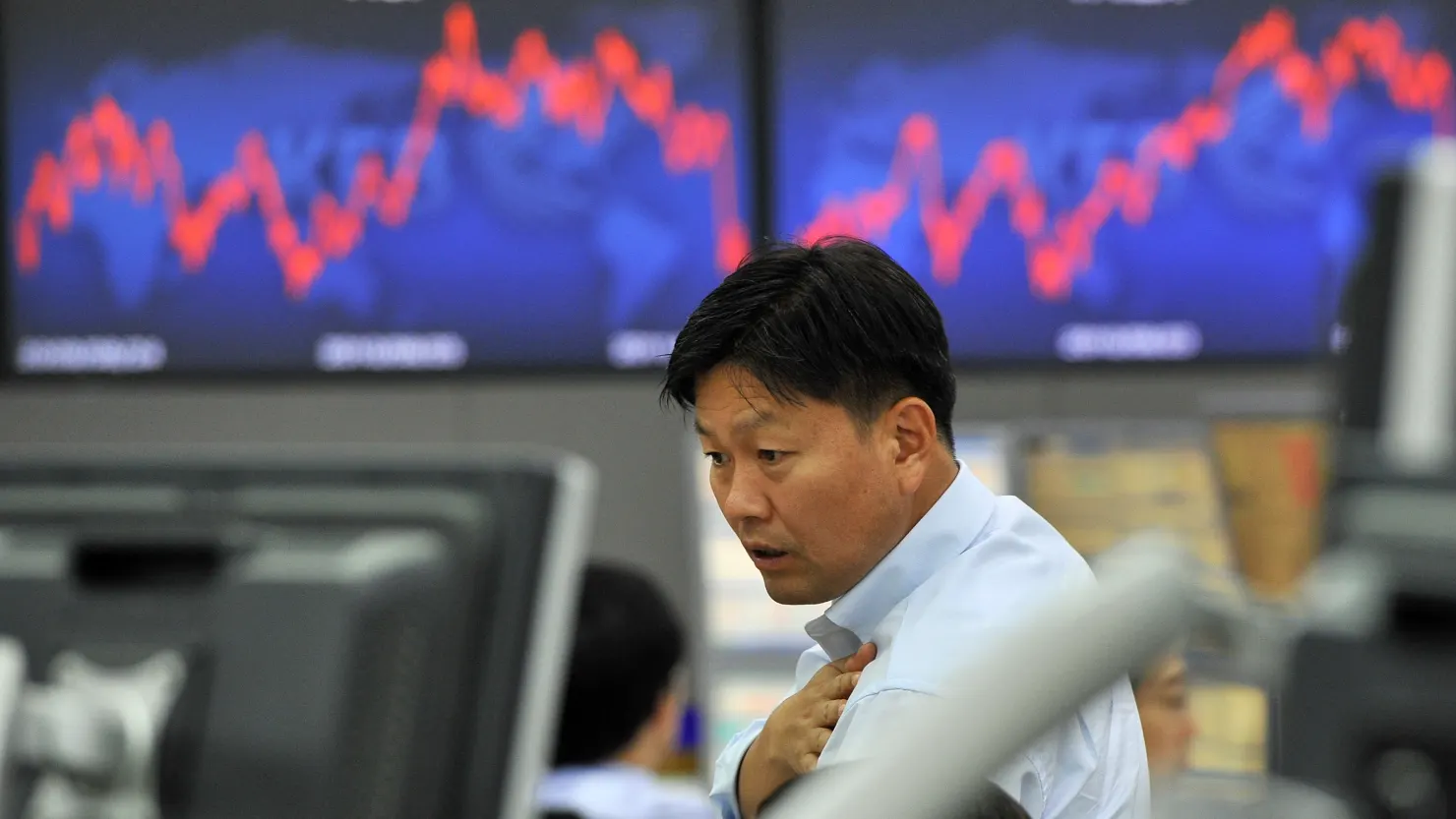
The global financial system is currently navigating its darkest hour since the 2020 pandemic. As the sun rose over Seoul and Tokyo on Wednesday, March 4, 2026, the Asian Stock Market Today didn’t just open in the red, it essentially broke. Following the weekend’s “Operation Epic Fury” strikes and the confirmed death of Iran’s Supreme Leader, the markets have shifted from a “correction” to “total capitulation.” If you are monitoring the Asian Stock Market Today, you are witnessing history: the South Korean Kospi has triggered a Level 1 circuit breaker after an unprecedented 11% vertical drop, effectively halting trade as panic-selling overwhelmed the exchange’s digital infrastructure.
The fragility of the Asian Stock Market Today has been laid bare by its extreme sensitivity to global energy prices. With Brent crude skyrocketing toward $95 per barrel, energy-dependent giants like South Korea, Japan, and Taiwan are facing an existential economic threat. The Asian Stock Market Today is currently reflecting a “worst-case scenario” where energy supplies from the Middle East are permanently disrupted. For any investor holding global equities, the data coming out of the Asian Stock Market Today is a terrifying preview of what the London and New York sessions will likely look like later this afternoon.
1.The Korean Meltdown: Understanding Asian Markets Today
The synchronized nature of the crash is what makes the Asian Markets Today so alarming. It isn’t just one sector or one country; it is a region-wide rejection of risk. When we look at the Asian Markets Today, the sheer volume of sell orders in the semiconductor space, led by Samsung and SK Hynix, suggests that institutional investors are liquidating their most profitable “AI boom” positions to cover margin calls elsewhere. This “liquidity vacuum” is the primary driver behind the red screens we see across the Asian Markets Today landscape.
Furthermore, the Asian Markets Today are reacting to the collapse of the Korean Won, which has plummeted to a five-year low against the US Dollar. As capital flees regional currencies for the safety of US Treasuries, the Asian Markets Today are being hit by a double-edged sword: falling asset prices and depreciating currencies. For the retail trader, the Asian Markets Today serve as a stark reminder that geopolitical “black swans” can wipe out years of gains in a single ninety-minute trading window. The volatility in Asian Markets Today is currently off the charts.
2.Systematic Risk: Asian Financial Markets Today
The crisis has moved beyond stocks and into the core of the banking sector. The Asian Financial Markets Today are grappling with a sudden spike in sovereign bond yields as investors demand a higher “war premium.” This shift in the Asian Financial Markets Today means that the cost of borrowing for corporations across the continent will rise almost instantly. When the Asian Financial Markets Today are under this much pressure, the ripple effects extend to every corner of the global economy, from shipping lanes in Singapore to manufacturing hubs in Vietnam.
Moreover, the Asian Financial Markets Today are currently pricing in a prolonged conflict that could last months, not weeks. Central banks across the region are holding emergency meetings, but their ability to intervene in the Asian Financial Markets Today is limited when the root cause is a physical disruption of energy supplies. The “fear gauge” within the Asian Financial Markets Today has surpassed levels seen during the 2023 banking jitters, signaling that the Asian Financial Markets Today are preparing for a long-term inflationary shock.

3.The Indian Perspective: Asian Paints Share Price Today
For the Indian investor, the global turmoil has hit home through the Asian Paints Share Price Today. As a company that relies heavily on crude oil derivatives for its raw materials, the Asian Paints Share Price Today is often the first to feel the “heat” of a Middle East oil spike. With Brent crude jumping 15% in 48 hours, the Asian Paints Share Price Today has seen a sharp 3.5% drop in early morning trade on the NSE and BSE. Traders are dumping the Asian Paints Share Price Today because higher input costs mean squeezed profit margins for the upcoming fiscal year.
The movement in the Asian Paints Share Price Today is a classic example of “inter-market analysis.” While the company’s fundamentals are solid, the Asian Paints Share Price Today is currently a victim of global geography. If the Strait of Hormuz remains blocked, the Asian Paints Share Price Today could test its 52-week lows in the coming sessions. For long-term holders, the volatility in the Asian Paints Share Price Today is a painful reminder that even domestic consumer giants are tethered to the price of oil in a war-torn Middle East. The Asian Paints Share Price Today remains a critical stock to watch for broader Indian market sentiment.

4.Fear Across the Continent: Asian Share Markets Today
From Tokyo to Sydney, the Asian Share Markets Today are in a state of retreat. Japan’s Nikkei 225 has lost over 1,800 points, as investors realize that Japan’s 95% dependence on Middle Eastern oil is a massive strategic vulnerability. The Asian Share Markets Today are currently seeing a total exodus from the aviation and automotive sectors, as higher fuel costs make travel and transport prohibitively expensive. In the Asian Share Markets Today, the only stocks showing green are defense contractors and gold miners.
The “contagion” effect within the Asian Share Markets Today is being fueled by algorithmic trading bots that are programmed to sell when a circuit breaker is hit in a neighboring market. This is why the Asian Share Markets Today look so uniform in their descent. Whether you are looking at the blue chips in Hong Kong or the tech startups in Taiwan, the Asian Share Markets Today are all speaking the same language: “Get out now.” The total market cap wiped off the Asian Share Markets Today in just four hours is estimated to be over $1.2 trillion.
5.Real-Time Tracking: Asian Stock Market Live
If you are watching the Asian Stock Market Live tickers, the numbers are changing faster than the human brain can process. The Asian Stock Market Live feeds are currently showing “Halted” signs for over 200 large-cap stocks in Seoul. Tracking the Asian Stock Market Live data is essential right now because it provides the “lead indicators” for the Nifty 50 opening in India. As the Asian Stock Market Live continues to show downward pressure, the probability of a “relief rally” later today seems increasingly slim.
Many retail traders are glued to the Asian Stock Market Live screens, hoping to find a support level that holds. However, in a war-driven crash, technical analysis often takes a back seat to the Asian Stock Market Live news headlines. The current Asian Stock Market Live environment is a “high-volatility” zone, where even a small headline can cause a 2% swing in minutes. For those who trade the “gap,” the Asian Stock Market Live data is currently the most valuable and most stressful information on the internet.
6.Breaking News: Asian Markets Today Live
The Asian Markets Today Live updates are reporting that the Korean Exchange (KRX) may extend the trading halt if the selling doesn’t subside. According to Asian Markets Today Live reports, this is the first time a Level 1 circuit breaker has been activated in South Korea since the dark days of early 2020. The Asian Markets Today Live feed is also highlighting a massive spike in “Safe Haven” assets, with gold prices hitting an all-time high of $2,890 per ounce.
Investors are using the Asian Markets Today Live streams to gauge the level of institutional participation in the sell-off. Unfortunately, the Asian Markets Today Live data confirms that FIIs (Foreign Institutional Investors) are the ones leading the exit, dumping nearly $4 billion worth of regional equities in the first hour alone. As the Asian Markets Today Live broadcast continues, the focus is shifting toward the response from the G7 nations. Without a coordinated diplomatic intervention, the Asian Markets Today Live carnage is likely to spread across the Atlantic by midday.
7.Essential Statistics: The 2026 "Black Wednesday"
To grasp the magnitude of the Asian Stock Market Today collapse, look at these verified numbers:
- KOSPI Plunge: 11% (Circuit Breaker Triggered).
- Nikkei 225 Drop: 5.2% (1,800+ point loss).
- Brent Crude Price: $94.50 (Up 15% in 48 hours).
- Asian Paints Impact: 3.5% drop in early morning trade on NSE/BSE.
- Capital Flight: $1.2 Trillion in market cap wiped out across the region.
- Gold Price: $2,890 (All-time high for bullion).
These stats prove that the Asian Stock Market Today isn’t just having a “bad day”, it is undergoing a systemic reset. The Asian Stock Market Today is signaling that the era of globalization and easy trade is being replaced by a “war economy” mindset.
8.The "Hormuz Factor" and the Asian Stock Market Today
The reason the Asian Stock Market Today is reacting so violently is the “Strait of Hormuz” factor. Nearly 20% of the world’s oil passes through this narrow waterway. With Iran threatening a total blockade in retaliation for the “Epic Fury” strikes, the Asian Stock Market Today is pricing in a global energy famine. For the manufacturing-heavy economies represented in the Asian Stock Market Today, no oil means no production.
This is why the Asian Stock Market Today is seeing such a deep sell-off in the automotive and shipping sectors. The Asian Stock Market Today is effectively saying that if the ships don’t move, the stocks can’t rise. Even the tech-heavy components of the Asian Stock Market Today are suffering because the electricity needed to run massive data centers is becoming prohibitively expensive. The Asian Stock Market Today is currently the canary in the coal mine for the global industrial economy.
9.Sectoral Damage: Asian Stock Market Today Breakdown
If we break down the Asian Stock Market Today by sector, the damage is staggering. The tech sector in the Asian Stock Market Today is down 8%, the banking sector is down 6%, and the consumer discretionary sector is down 7.5%. The only sector in the Asian Stock Market Today that is currently in the green is Aerospace & Defense, as governments across the region prepare for a potential widening of the conflict.
This sectoral rotation within the Asian Stock Market Today tells us that investors are no longer looking for “growth”; they are looking for “survival.” The Asian Stock Market Today has shifted from a “buy-the-dip” mentality to a “sell-the-rip” desperation. Even the “safe” dividend-paying stocks in the Asian Stock Market Today are being liquidated to meet the massive margin calls coming from the derivatives market. The Asian Stock Market Today is currently a textbook example of a liquidity crisis.
9.Frequently Asked Questions (FAQs)
Why did the Asian Stock Market Today hit a circuit breaker?
The Asian Stock Market Today triggered a circuit breaker, specifically in South Korea’s KOSPI, due to an 11% plunge fueled by geopolitical panic. The escalation of the Middle East crisis and the threat of a blockade in the Strait of Hormuz led to a massive sell-off as investors feared a global energy supply disruption.
How are Asian Markets Today reacting to the oil price surge?
The Asian Markets Today are in a state of high alarm as Brent crude prices jumped 15% to over $94 per barrel. Since most of the major economies in the region such as Japan and South Korea are massive energy importers, the Asian Markets Today are pricing in severe inflation and a significant slowdown in manufacturing and transport sectors.
What is the impact on the Asian Financial Markets Today regarding currency?
The Asian Financial Markets Today are seeing a flight to safety, causing regional currencies like the South Korean Won and the Japanese Yen to weaken significantly against the US Dollar. This currency devaluation in the Asian Financial Markets Today makes imports more expensive, adding another layer of economic pressure to the ongoing stock market crash.
Why is the Asian Paints Share Price Today falling so sharply in India?
The Asian Paints Share Price Today is plummeting because the company is highly dependent on crude oil derivatives for manufacturing its products. As global oil prices skyrocket, the Asian Paints Share Price Today reflects investor fears of shrinking profit margins and rising input costs, making it one of the most vulnerable stocks in the Indian market right now.
Where can I find the Asian Stock Market Live updates during the crash?
You can track the Asian Stock Market Live data on major financial news platforms like Bloomberg, Reuters, and the NSE/BSE official websites. Watching the Asian Stock Market Live feeds is essential for traders looking to understand “gap-down” opening levels and to monitor whether circuit breakers in other Asian Share Markets Today are being activated as the session progresses.
Trending







Conclusion: A New Reality for Global Markets
In conclusion, the Asian Stock Market Today has delivered a shock to the global system that will be felt for years. The combination of the Korean circuit breaker and the oil price spike has created a “perfect storm” that few were prepared for. Whether you are tracking the Asian Markets Today from a distance or watching the Asian Paints Share Price Today hit your personal portfolio, the message is clear: the era of cheap energy and geopolitical stability is over.
As the Asian Stock Market Today closes its morning session, the world’s attention turns toward Europe and the US. Will they follow the Asian Stock Market Today into the abyss, or can the central banks find a way to stem the bleeding? One thing is certain: the Asian Stock Market Today has officially ended the “post-pandemic bull run” and ushered in a new, dangerous chapter of the 21st-century economy. Stay disciplined, watch the Asian Stock Market Live feeds, and keep your “Safe Haven” assets close.
How to Book Hotel with Credit Card Points for Free Stays: Marriott, Taj & ITC Guide?
April 30, 2026
1:26 pm
Posted on 03/03/2026 How to Book Hotel with Credit Card Points for Free Stays: Marriott, Taj & ITC Guide? A few years back, “earning a free hotel night” felt like something only frequent flyers and travel bloggers cracked. In April 2026, that’s no longer true. With ₹1.54 lakh crore in
How Credit Card Reward Points Work in India: What Is 1 Point Really Worth?
April 28, 2026
1:55 pm
Posted on 03/03/2026 How Credit Card Reward Points Work in India: What Is 1 Point Really Worth? Check your credit card statement recently? Do you feel like your reward points are not going far as they used to? You are right it’s not just you. There are now over 11.7
Best Credit Card for Low CIBIL Score: 750 vs 700 Score Comparison & Approval Tips (2026)
April 25, 2026
7:04 am
Posted on 03/03/2026 CIBIL Score Credit Card Explained: 700 vs 750 CIBIL Score & Approval Chances (2026) Let’s be honest getting a credit card in India today feels a bit like applying for a college admission. There’s a number that decides almost everything, and that number is your CIBIL score.