Some cards sell you a dream and hide the math. The HSBC TravelOne Credit Card does something a bit more honest. It tells you up front that flights, travel aggregators, and foreign currency spend earn the most, that the lounge visits are capped, and that there’s a fee to cover. What you do with that information decides whether it’s a bargain or an expensive habit.
So here’s the full picture on the HSBC TravelOne credit card benefits, the real cost, and who should actually apply. If you want to see where it sits among the field first, our travel credit cards comparison lines it up against the rest.
HSBC TravelOne Credit Card Benefits at a Glance
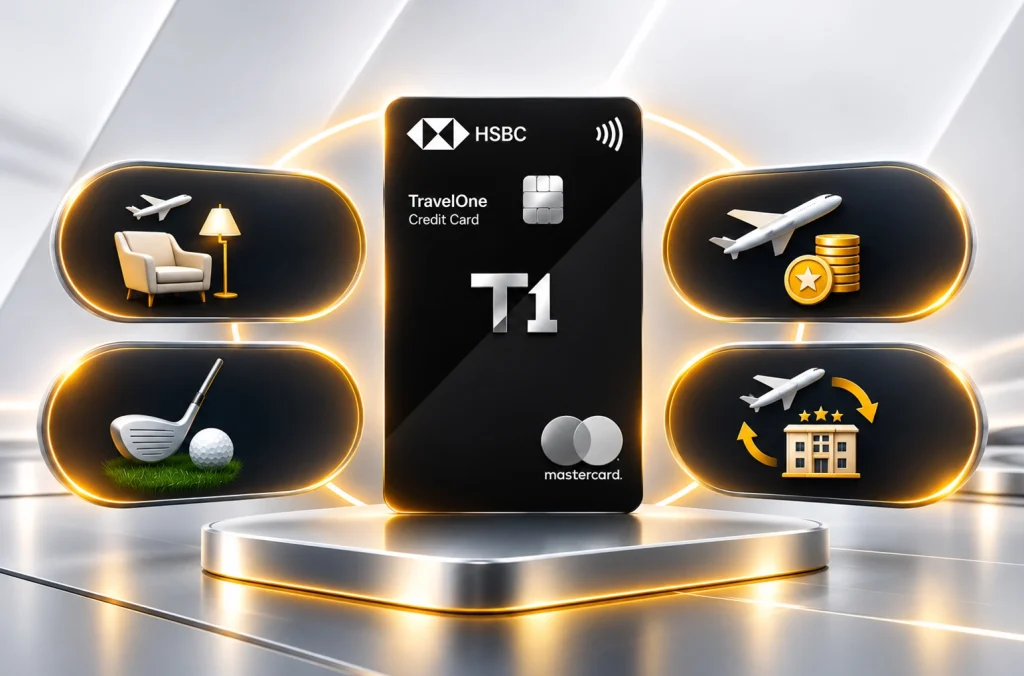
The HSBC TravelOne credit card benefits revolve around three things: accelerated reward points on travel, a decent lounge allowance, and flexible transfers to airline and hotel partners. Beyond that, you get:
- 6 domestic and 4 international airport lounge visits a year
- 4 complimentary golf rounds and 12 lessons a year, with a limit of one a month
- Purchase protection of up to USD 20,000 a year
- 15% off on select travel platforms, which varies by partner
None of that needs a monthly spend target for the lounges, which is refreshing. Plenty of cards make you chase a number just to walk into the lounge. Here you simply use your visits.
HSBC TravelOne Annual Fee: What You’ll Actually Pay
The HSBC TravelOne annual fee is Rs. 4,999 plus GST, and the joining fee is the same. Spend more than Rs. 8 lakh in a membership year, and the annual fee is waived, which works out to roughly Rs. 66,700 a month.
Most people won’t clear that bar, so it’s worth asking whether the card earns back the fee on its own. Say you spend Rs. 150,000 a year on flights and forex. At 4 points per Rs. 100, that’s 6,000 points. If you value a point at around Re. 1, a conservative figure, you’re near the fee with GST before counting lounges or the welcome offer. Spend more, and the card moves ahead.
If you’d rather pay nothing, check our lifetime free credit cards instead and compare what you give up.
HSBC TravelOne Forex Markup: The Part to Read Carefully
Here’s the awkward bit for anyone comparing HSBC credit cards. The HSBC Travel One forex markup is reported at 3.5 percent plus GST across the review sites we checked, and HSBC’s own product listing doesn’t state a figure, so confirm it with the bank before you travel. That’s higher than the 1.5 to 2 percent many travel cards charge and miles away from the zero markup on cards like the Scapia Credit Card.
The consolation is that foreign currency spends still earn the accelerated 4 points per Rs. 100. So a Rs. 100,000 trip abroad costs you around Rs. 3,500 in markup but returns about 4,000 points. Whether that’s fair depends on what those points are worth to you, which brings us to rewards.
Credit Card Reward Points: How the Earning Works
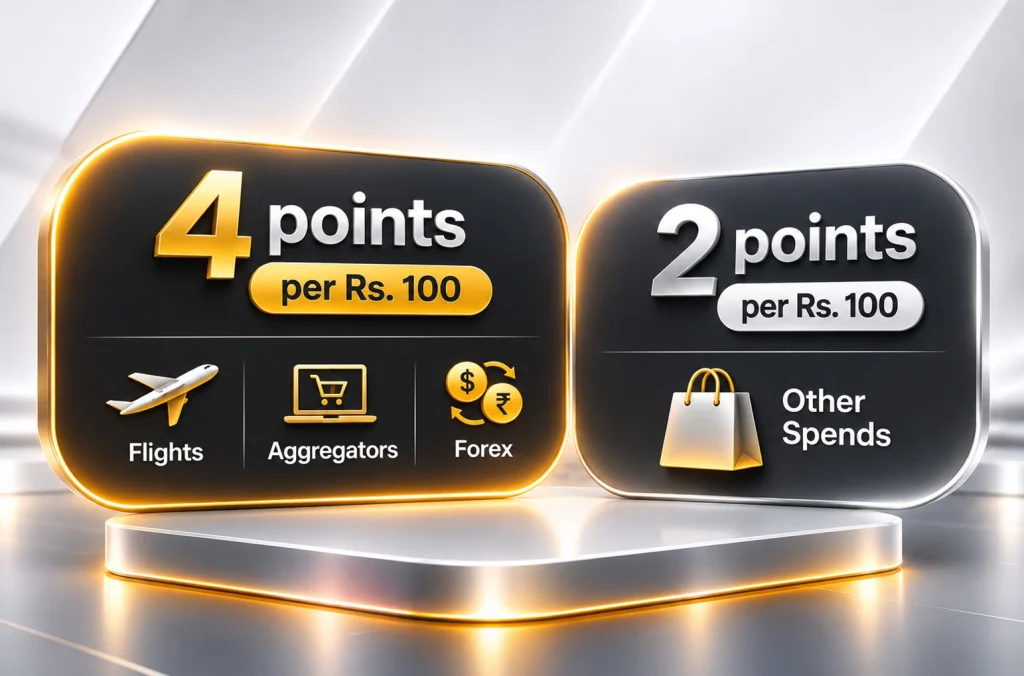
Credit card reward points on this card come in two speeds:
- 4 points per Rs. 100 on flights, travel aggregators, and foreign currency spending
- 2 points per Rs. 100 on other eligible spends, with no cap on the base rate
Reviewers report that the 4-point rate is capped at 50,000 points a month, shared across primary and add-on cards. Most travelers won’t get near it.
Plenty of categories earn nothing, including utilities, insurance, education, government payments, wallet loads, rent, and jewelry. Fuel is excluded from earning too. So don’t plan to push your entire monthly budget through it.
Two bonuses reward heavier users. Spend Rs. 12 lakh in a year, and you get 10,000 bonus points. New cardholders who spend Rs. 25,000 within 30 days of opening the account using the HSBC India mobile app get Rs. 1,000 cashback, a Rs. 3,000 PostCard voucher, and three months of EazyDiner Prime. Online applicants who complete video verification may also get a Rs. 250 Amazon eGift voucher, available until 31 March 2027.
Where the Points Go: Airline and Hotel Transfers
This is the real heart of the card. Your points convert to air miles and hotel points through the HSBC India app, with over 20 airline and hotel partners. Most transfers are at 1:1, including Air India Maharaja Club, Singapore Airlines KrisFlyer, and Marriott Bonvoy, though a few, like Shangri-La, convert at less favorable ratios.
Who Can Apply for HSBC TravelOne Credit Card
HSBC lists eligibility as ages 18 to 65 for salaried applicants and 25 to 65 for the self-employed. The minimum income is Rs. 6 lakh a year for salaried applicants and Rs. 12 lakh for self-employed applicants, and you need to live in one of the listed cities. Not sure you’ll qualify? The credit card finder points you to cards that suit your profile, and the HSBC credit cards listing shows the rest of the bank’s range, such as the HSBC Live+ for everyday dining and groceries.
Is It One of the Best Travel Credit Cards in India?
Among HSBC credit cards, it’s the travel specialist, and in the mid-premium bracket, the HSBC TravelOne credit card benefits make it a strong contender. It earns a spot in most lists of the best travel credit cards in India. You get lounge visits with no spend condition, 20+ transfer partners, and a solid 4-point rate on flights and forex.
It loses ground on forex, and the Rs. 4,999 fee is a real cost for light spenders. If you want a zero-fee travel option, the Scapia card wins on forex. If you want to compare against the premium end, the Axis Magnus is worth a look, and our top credit cards roundup covers more ground.
The sweet spot is someone who flies a few times a year, books through aggregators, and wants to collect miles for award flights rather than cashback. For terms confirmed straight from the issuer, see HSBC’s official TravelOne listing.
Frequently Asked Questions
Accelerated points on flights and forex, 6 domestic and 4 international lounge visits a year, golf privileges, and transfers to over 20 airline and hotel partners.
It’s Rs. 4,999 plus GST, waived if you spend more than Rs. 8 lakh in a membership year.
Review sites report 3.5 percent plus GST, though HSBC’s own listing doesn’t state it, so confirm before traveling. Spends abroad still earn 4 points per Rs. 100.
Reviewers report they stay valid for three years. Check HSBC’s current terms for the exact rule.
Probably not. With a Rs. 4,999 fee and a 2-point base rate, lighter spenders are better off with a lifetime-free option.